Susan Thomas
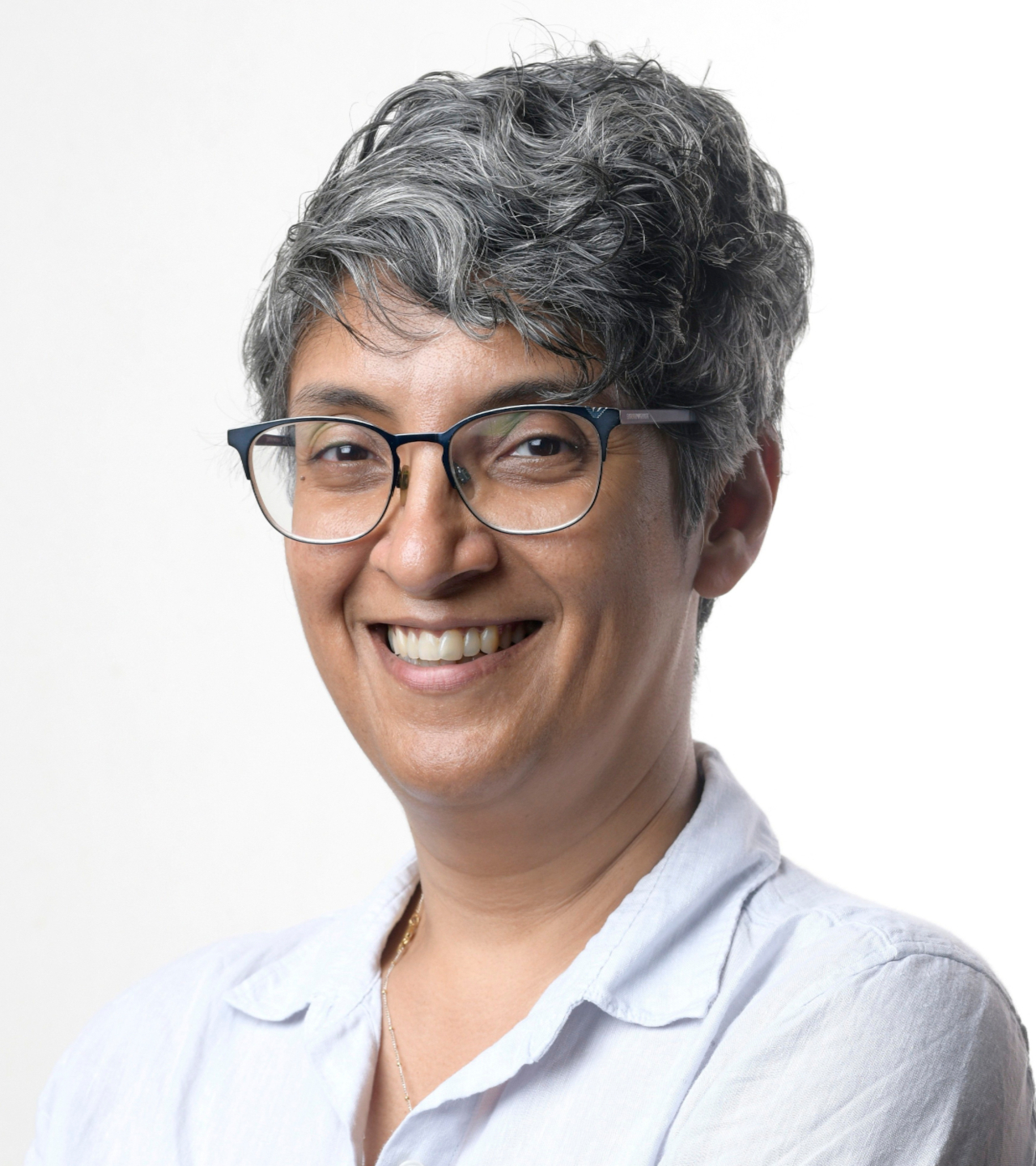
I am an economist.
Google Scholar · RePEc · ORCID · Email
Recent research
-
2026
Abstract
Information technology (IT) systems are now ubiquitous in government. The Government of India has tripled its spending in real terms on IT procurement over the last fifteen years. IT procurement is tricky because these systems need continuous maintenance and refinement, and traditional systems of procurement are unsuitable for solving the incomplete contract problem that follows IT procurement. We build on three case studies from India – Aadhaar, Passport Seva, and MCA-21 – to make the case for why we need new thinking on IT procurement. Our solutions hinge around the fact that the government needs to build robust internal technical expertise even when system development has been outsourced. We make the case for flexible contracting, early concept verification, and strategic investments in state HR capabilities to successfully navigate the marketplace for digital services.
-
Abstract
Governments in developing countries spend heavily on subsidies, yet much of the money never reaches households: the macro–micro gap. We measure this gap in Karnataka, India, across a natural experiment. Karnataka has been delivering conditional Direct Benefit Transfers (DBT) for about a decade now. In July 2023 the state introduced new “guarantee” schemes, and directed much of its DBT allocation to a near-unconditional scheme. Because administrative records are endogenous to the state that produces them, we measure household receipts independently, from the CMIE Consumer Pyramids Household Survey. We compare robust population estimates from this survey against the state’s reported expenditure on DBTs in both periods. The gap averaged about 78% over the seven pre-2023 years and fell to about 17% after the shift. The paper contributes independently measured evidence on subsidy delivery in India and a replicable method for auditing welfare programs in the presence of longitudinal data.
-
Abstract
IT systems procurement in government is no longer a back-office support function, but a critical requirement of modern state capacity. Traditional public procurement frameworks are ill-equipped for digital infrastructure. Rapid technological evolution creates an "incomplete contract" problem, rendering perfect ex-ante requirements impossible and leading to frequent change requests that trigger costly lifecycle disruptions. The continuous need for system iteration blurs the "make-or-buy" boundary, because robust internal technical expertise is needed even when development is outsourced. Building on three case-studies of public IT procurement in India, this article argues for a paradigm shift in how governments plan, procure, and maintain IT systems. It outlines an responsive framework centered on flexible contracting, early concept verification, expert-led dispute resolution, and strategic investments in state HR capabilities to successfully navigate the digital marketplace.
-
Abstract
We examine the impact of borrowing on consumption smoothing for households entering credit markets for the first time, using a large panel dataset with income, expenditure and financial choices of 150,000 households in India. Compared to households that never borrow, first-time borrowers are poorer, younger, less educated, and face higher income volatility. Their decision to borrow is often preceded by a change in income or consumption, regardless of whether it is a decrease or an increase. The act of borrowing increases both the level and the volatility of consumption expenditure. Credit does not help to smooth consumption, even for first time borrowers with no shocks to income and consumption. Higher volatility of consumption persists after borrowing, particularly for expenditure on non-durable goods such as food or planned household expenditure. This suggests that new borrowers use credit as one component of a broader risk-management strategy that involves multiple adjustments within their consumption portfolio.
Now reading
The Masani Reading Group meets to discuss one book each quarter.
- Sep 2026